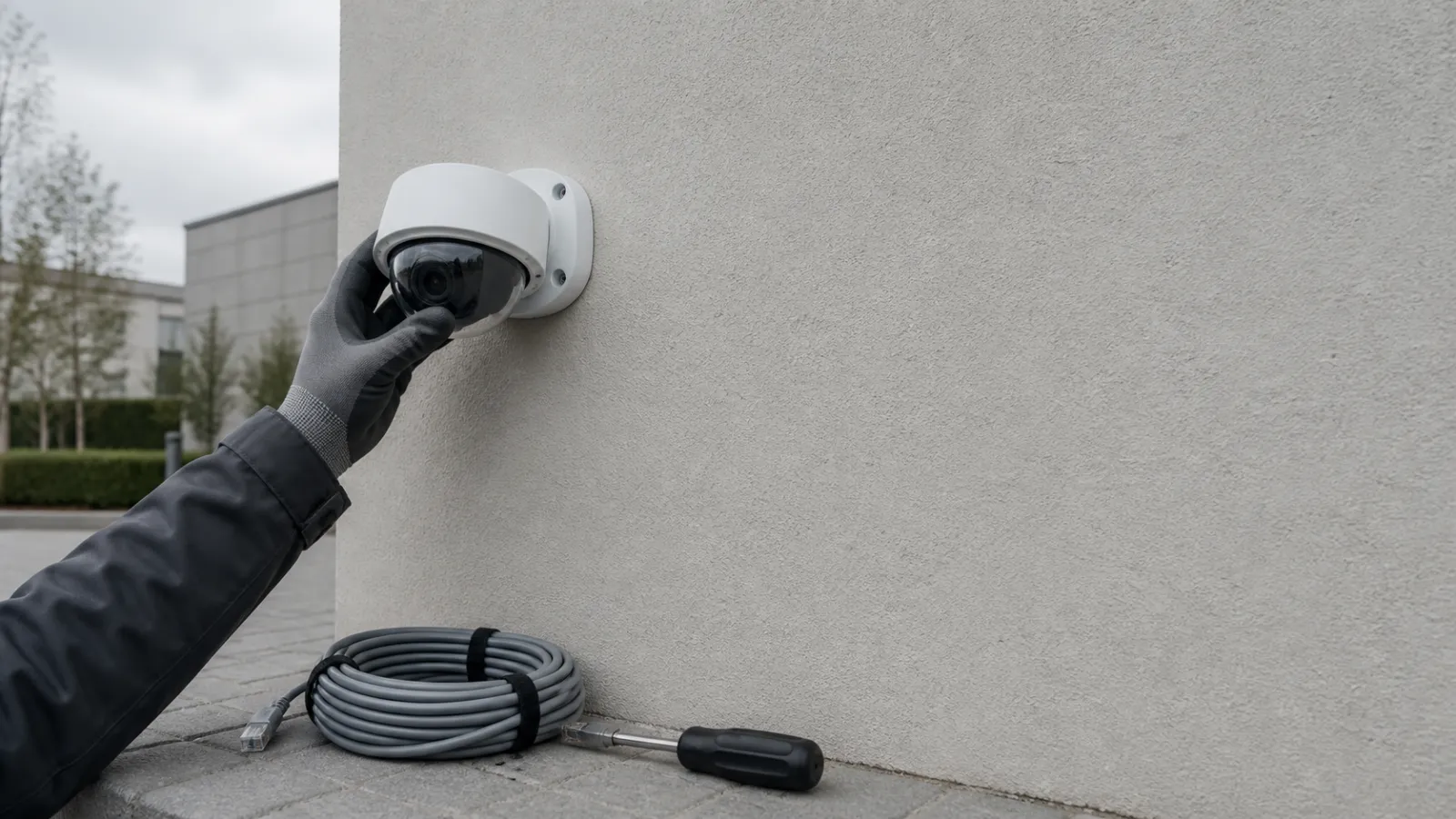
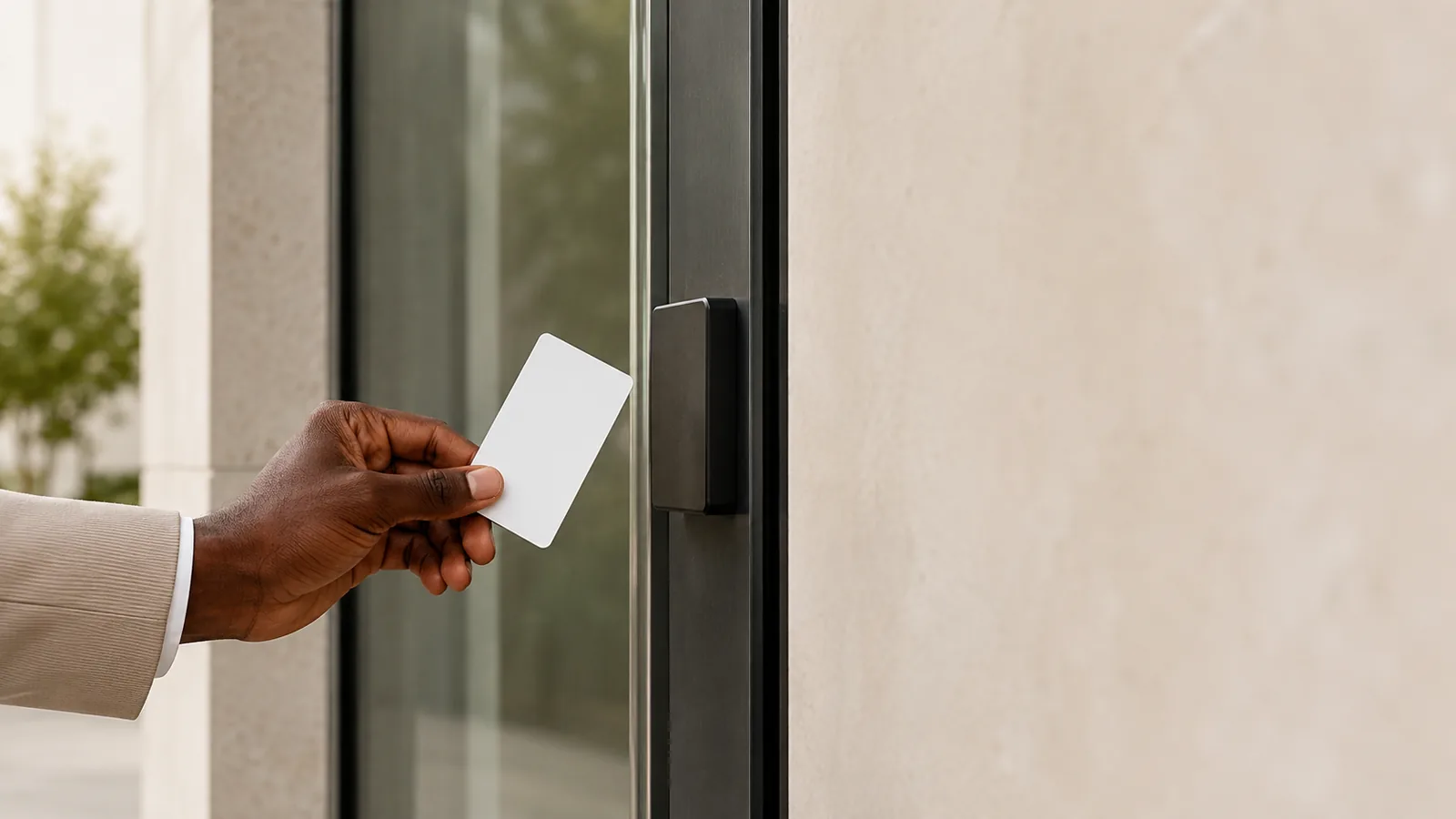
Why Your CCTV Network is Your Biggest Cyber Threat: Architecting Converged Security in 2026
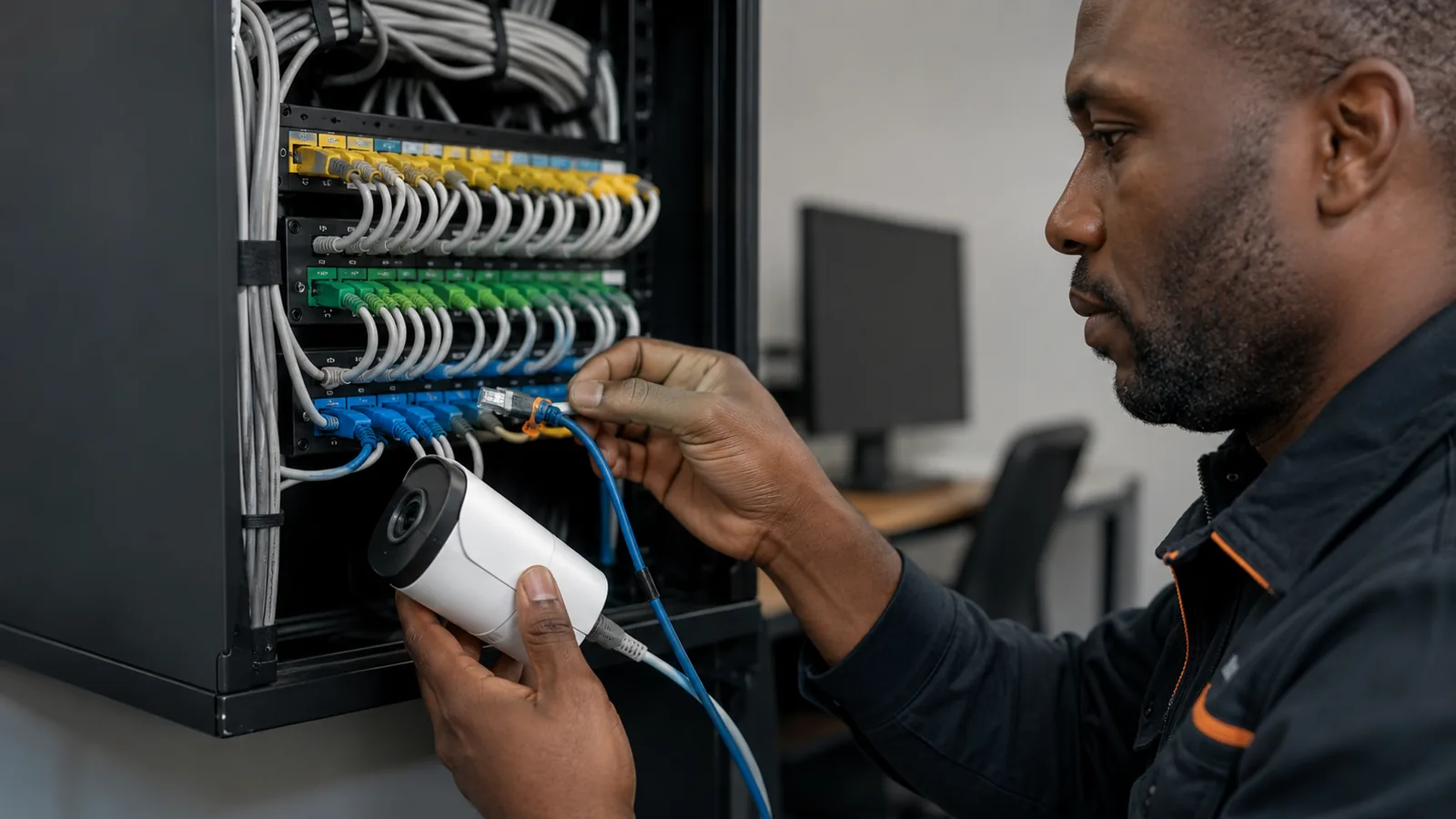
Facilities teams buy cameras, IT teams ignore them—creating an unpatched IoT backdoor into your core ERP. Learn the Zero Trust micro-segmentation protocol for physical security.
- IP cameras sharing the same network as ERP or Active Directory create a lateral-movement path if a camera or its management interface is compromised.
- VLAN micro-segmentation isolates CCTV, access control, and IT networks so a compromised camera cannot reach the ERP or Active Directory.
- VMS (Video Management Software) integration with SIEM enables correlated alerts: physical breach + network anomaly fires one incident, not two.
- Converged security under one contract eliminates the handoff gap — the point where CCTV vendor scope ends and IT vendor scope begins.
- KDPA compliance requires CCTV footage to be stored with access logging; most standalone systems have no audit trail capability.
Executive Briefing: IP cameras, NVRs, access controllers, and business systems often meet on the same network. This guide explains how VLAN isolation, restricted management access, and monitored traffic keep a compromised physical-security device away from ERP and identity systems.
For the full service architecture, see our CCTV Surveillance offering or explore our Cybersecurity solutions.
The Business Pain: The 'Invisible' Facilities Backdoor
When remote viewing is enabled with direct port forwarding, or an NVR is connected to the same flat VLAN as HR and Finance systems, a compromised camera or recorder can become a route into business-critical services. The fix is architectural: isolate the devices, restrict management access, and log the traffic allowed across the boundary.
Once an attacker secures a foothold on an IP camera, they can scan whatever that device is allowed to reach. A flat network provides no segmentation boundary, and a perimeter firewall does not govern traffic moving between devices inside it. A dedicated camera and recorder VLAN, restricted routes, and logged management access contain that path before it reaches ERP or identity systems.
The Lateral Attack Vector
90% of breaches involve lateral movement across flat networks.
The Engineering Architecture: Hardened Isolate Governance
To defend against IoT-based lateral spread, 912 Limited implements a Hardened Convergence Architecture that treats every camera, reader, and sensor as a potentially hostile endpoint.
1. VRF (Virtual Routing and Forwarding) Isolation
Physical security hardware (cameras, biometric scanners, power energizers) must reside on a deeply isolated Virtual Routing and Forwarding (VRF) instance. Unlike a traditional VLAN, a VRF creates a separate routing table for security traffic.
- Strict Layer 3 Partitioning: No user in the Finance department can even 'ping' an IP camera. The networks are logically invisible to each other.
- Firewall Transit: All traffic between the security VRF and the corporate VRF must pass through a Next-Generation Firewall (NGFW) which performs deep packet inspection (DPI) to ensure only authorized video streams are crossing the boundary.
2. 802.1X Port-Level Authentication & MAC Filtering
In a campus environment, external cameras are physically vulnerable. An intruder can unplug an outdoor camera and attempt to plug in a laptop to 'sniff' your corporate network. We architect Port-Level Security using the 802.1X protocol.
- Certificate-Based Auth: Every camera is issued a unique digital certificate. If the device plugged into the port cannot present this certificate, the switch port instantly disables itself and triggers a silent alarm.
- MAC Sticky Security: We lock every switch port to the specific MAC address of the installed hardware, preventing 'device swapping' by intruders.
3. Outbound-Only ZTNA Tunnels for Remote Access
We eliminate the need for dangerous 'Port Forwarding' or DDNS entirely. Modern 912 installations utilize Zero Trust Network Access (ZTNA) connectors. The security server establishes an outbound-only encrypted tunnel to a secure global monitoring gateway. When a director wants to view a site from their phone, they connect to the gateway, which verifies their identity (MFA) and device health before 'stitching' the two tunnels together. Your security hardware is never exposed to the public internet.
The Regional Context: Kenya's Regulatory Landscape
Compliance with the ODPC DPA 2019
In Kenya, video surveillance and biometric scanning are classified as sensitive data processing activities. The Office of the Data Protection Commissioner (ODPC) mandates that PII—including facial templates—must be protected with 'appropriate technical measures.' Our architecture addresses this via:
- Volume Encryption: AES-256 encryption on all NVR/DVR storage arrays.
- Automated Data Purging: Scripts that ensure footage is not retained beyond the period declared in your mandatory Data Protection Impact Assessment (DPIA).
- Audit Logging: Granular logs showing exactly who viewed which camera and when, satisfying ODPC transparency requirements.
Case Study: West African Manufacturing Breach Prevention
An industrial site in West Africa was targeted by a ransomware syndicate. The attackers gained initial access through an unpatched firmware vulnerability in a legacy biometric gate reader. Because the site had previously implemented a 912-engineered Micro-segmented VRF, the ransomware was trapped within the security VLAN.
While the gate software was temporarily compromised, the malware was physically and cryptographically unable to 'see' or bridge into the production ERP or the financial servers. The cost of recovery was limited to a single gate controller firmware update, rather than a multi-million-dollar ransom payout and weeks of global factory downtime. This is the true ROI of architectural isolation.
The 912 'Infrastructure-First' Security Model
Most CCTV vendors sell you 'cameras'. 912 Limited sells you Infrastructure Assurance. By unifying physical security with professional IT networking standards, we ensure that your protection doesn't become your greatest vulnerability. We bridge the gap between Facilities and IT, providing a single, hardened security posture across your entire regional enterprise. We don't just secure your perimeter; we secure your internal data from your own hardware.
Is your security a backdoor?
Most companies don't realize they've been breached until the ransom note appears—and it often starts with an unpatched biometric reader. Let 912 Limited conduct a Converged Security Audit of your physical and cyber isolation layers today.
Interested in building these architectures? Explore our Physical Security solutions to see how we unify these protocols under one performance-backed contract.
Frequently Asked Questions
Why are CCTV cameras a cybersecurity risk for Kenyan businesses?
What is converged security architecture?
How should CCTV be segmented on a Kenyan enterprise network?
About the Author
912 Expert Team
Enterprise Infrastructure Architects
The 912 Expert Team consists of certified infrastructure, security, and data architects designing resilient technology frameworks across 10 African countries.