StructuredCabling&NetworkInstallation
Cat6A · Fibre · TIA-568 Tested · Documented Handover
Structured cabling for Kenyan offices, depots, and multi-site businesses. We install Cat6A copper and fibre to TIA-568 standards, channel-test every run with the results in writing, and hand over labelled documentation — the backbone every camera, phone, and server quietly depends on. Delivered reference: cabling runs from 50 to 180 metres remediated across a seven-depot estate from Mombasa to Nakuru.
Request Consultation
Technologies in use
Evidence, not promises.
See how clients improved resilience, visibility, and operational control with 912.
Multi-depot cabling remediation
Cabling runs of 180m (Mombasa), 160m (Kisumu), and 50m (Nakuru) delivered as part of a seven-depot estate baseline — surveyed, installed, and documented per site.
Read the case studySingle-site IP CCTV backbone
The cabling backbone for a full IP CCTV installation, commissioned with a formal handover report.
Read the case studyWhen this service becomes urgent
912 builds structured cabling as the foundation for reliable network, CCTV, VoIP, and access-control systems. The work covers survey, labeling, containment, copper/fibre specification, testing, handover records, and future expansion paths.
Discovery call agenda
Cable survey, pathway design, Cat6/fibre specification, installation, testing, labeling, and documented handover.
- 1Confirm floor plan, endpoints, and bandwidth needs.
- 2Review containment, cable routes, and expansion requirements.
- 3Agree test and handover evidence.
What the numbers say about leaving this alone
Cabling is the only layer nobody re-does casually. Getting the pathways, labelling and certification right is what stops it becoming the constraint on everything installed after it.
ISO/IEC 11801-1 covers generic customer-premises cabling, while ISO/IEC 14763-2 covers its planning, installation, testing, documentation, and maintenance.
ISO/IEC(opens in a new tab) — standards, not statistics
No Kenyan or African primary research on cabling fault rates, downtime or recabling cost cleared verification, so this page quotes no performance figure.
High-Performance Data Infrastructure
Fiber Optic Backbones
- Splicing & termination
- Fiber characterization testing
- OTDR reporting
Cat6A & Cat7 Certification
- Fluke DSX certification
- Labeling & documentation
- Patch panel organization
Data Center Racking
- PDU installation
- Cable tray management
- UPS integration
The Silent Network Killer
Poorly terminated cables causing intermittent packet loss and slow application speeds.
Unlabeled 'spaghetti' wiring that makes troubleshooting impossible for IT teams.
UTP cables running alongside power lines causing electromagnetic interference.
Fiber optic links with high attenuation due to improper bend radii or dirty connectors.
Honest Risk Framing
What this protects against — and what it doesn't.
Conduit path may need separate civil work
Some future camera, access, or AP installations require conduit path creation before cabling can begin. We scope conduit needs during the site visit; civil-works subcontracting is quoted separately when buildings weren't designed for it.
Cable lengths driven by actual site routes
Quotes assume reasonable routing — we measured 180m for Mombasa, 160m for Kisumu, 50m for Nakuru on real deployments. Unusual obstacles (security walls, regulated zones, no-drill restrictions) can shift cable budget materially. We resurface this at site visit, not at installation day.
Hardware EOL is a documented finding, not a silent failure
When we find end-of-life cabling, patch panels, or switches during the audit, we document them in the deliverable rather than quietly working around. Replacement is your decision and your budget — we don't surprise-quote.
How We Deliver a Cabling Project
From survey to certified, documented handover.
Part of the 912 six-phase engagement model — this is how it runs for this service.
Site Survey & Design
We measure real cable routes, classify the environment, and design for the throughput you'll need in five years — not just today. Conduit and civil-works needs are scoped here, not sprung on you at install.
Certified Installation
Cat6A and fibre installed by certified engineers, kept clear of power runs to avoid EMI, and dressed to a labelling standard your IT team can actually read.
Fluke Channel Testing
Every run is channel-tested on a Fluke (or equivalent) tester; fibre is OTDR-tested. You get the per-cable results, not a verbal 'it's fine'.
Documentation & Handover
Labelled patch schedules, as-built maps, and per-run test reports handed over on completion — with manufacturer warranty registration where the installed cable system qualifies for it.
The 912 Difference
Tested, Not Assumed
Every run leaves with Fluke certification results in writing. Most standard installations are never tested — which is why intermittent packet loss only surfaces months later, after the installer is long gone.
One Accountable Backbone
Cabling, network, CCTV, access control, and Wi-Fi designed together under one contract — so the infrastructure your other systems ride on is owned by the team that runs them.
Commscope
Technology in scope
Panduit
Technology in scope
Schneider Electric
Technology in scope
Common Questions
Everything you need to know about Structured Cabling & Network Installation.
What cabling standards does 912 follow?
All structured cabling is installed to TIA-568 standards with end-to-end channel testing on a Fluke or comparable certified tester. We deliver test results per cable run as part of the handover. For data centres we follow TIA-942. Most installs use Cat6A copper for stations and OM4 fibre for backbone — futureproofed for 10G-to-the-desk and 100G uplinks.
How much does cabling cost?
For a 50-point office: KES 380,000 to KES 950,000 depending on cable category, conduit, and floor type. For a data centre or multi-floor build: KES 2M+. 912 quotes per-point pricing and walks the site before committing — no surprise change orders.
Do you provide a warranty?
Yes — 25-year channel warranty on all 912 structured cabling installs when paired with certified hardware (Panduit, Commscope, Nexans). We register the install with the manufacturer and provide the warranty certificate to the client.
How long does installation take?
A 50-point office: 5–10 working days from site survey to certified handover. A multi-floor enterprise build: 3–8 weeks coordinated around civil works. We provide a Gantt chart on day 1 and stand by it.
Do you handle fibre as well as copper?
Yes — both single-mode and multi-mode fibre, including splicing, OTDR testing, and patch panel certification. We use fibre for inter-building runs, server room uplinks, and CCTV trunks where distance or EMI rules out copper.
Where do you install?
Structured cabling across Kenya (Nairobi, Mombasa, Kisumu, Eldoret), plus regional projects in Rwanda, Senegal, Ghana, and DR Congo when integrated with our other services.
Related Technical Protocol

Biometric Access Control & the Kenya Data Protection Act: Your 2026 Compliance Playbook
Most Kenyan businesses that have installed biometric access control are processing sensitive personal data without ODPC registration, a DPIA, or explicit consent. Here is exactly what the Kenya Data Protection Act 2019 requires, what the ODPC can do, and what a genuinely compliant deployment looks like.
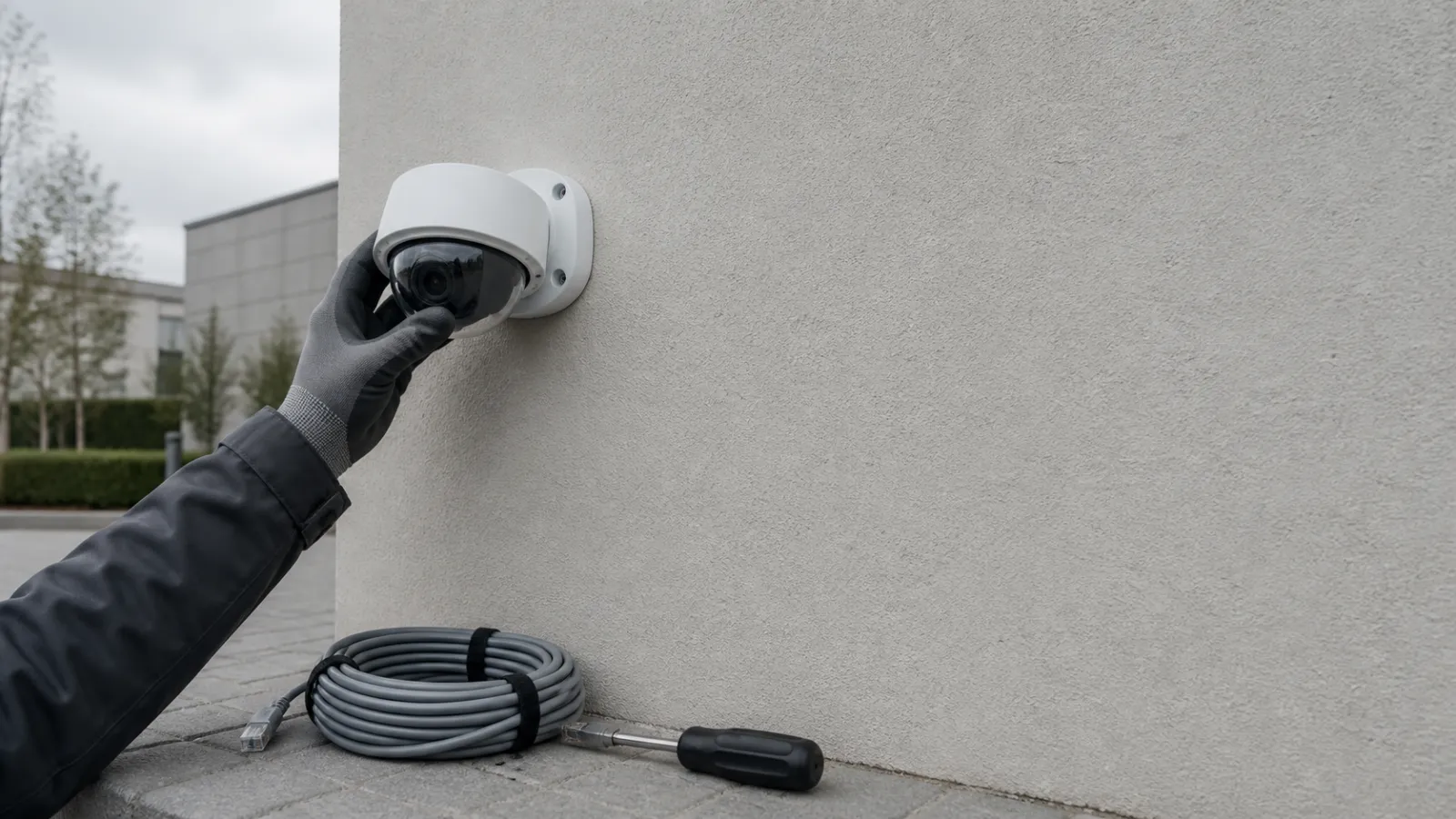
What CCTV Installation Really Costs a Kenyan Business in 2026
Most CCTV price lists quote single cameras. A business needs a system. Here is an honest breakdown of what commercial CCTV installation costs in Kenya, what drives the number, and how to avoid the hidden hardware markup.
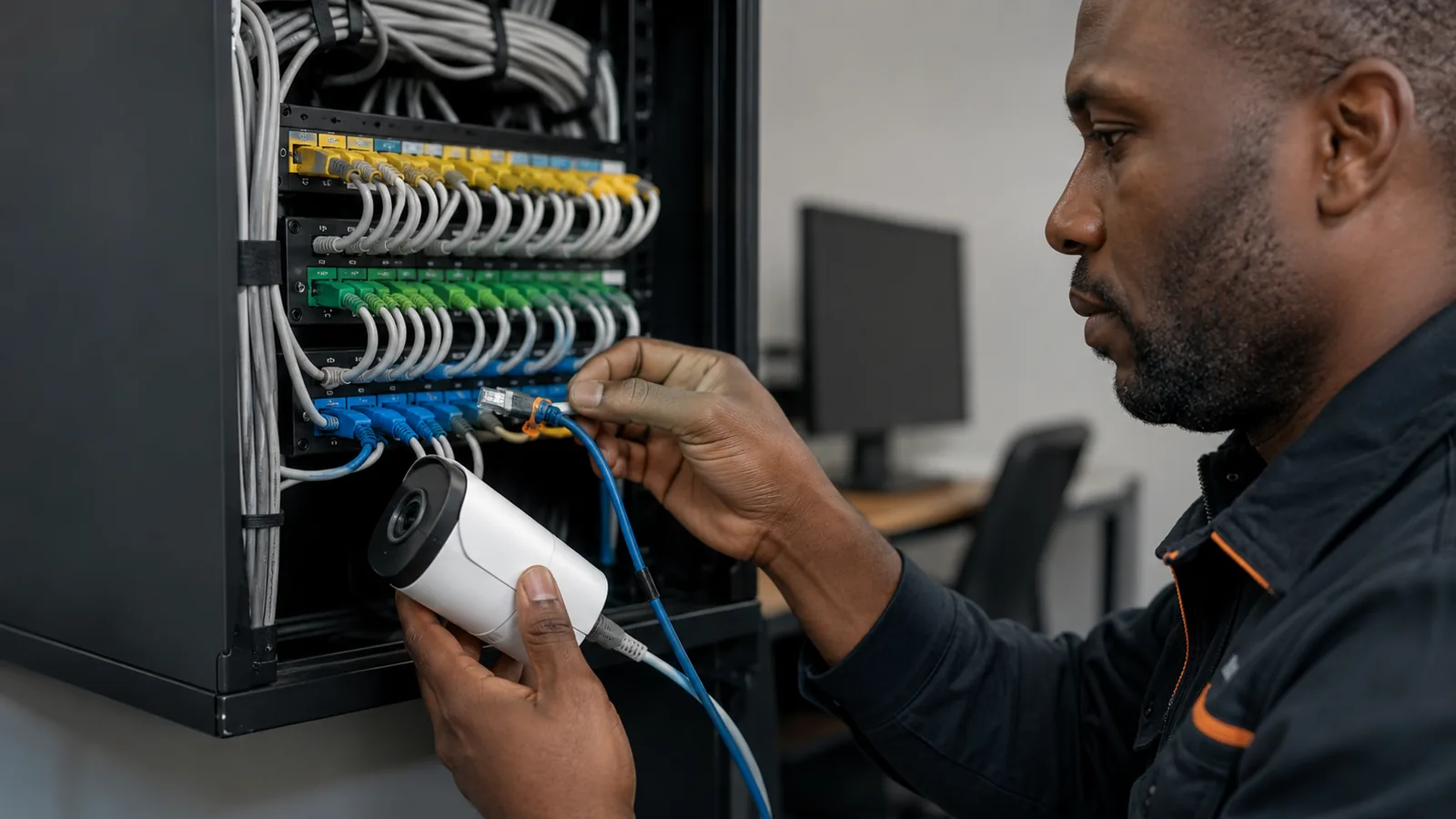
Why Your CCTV Network is Your Biggest Cyber Threat: Architecting Converged Security in 2026
Facilities teams buy cameras, IT teams ignore them—creating an unpatched IoT backdoor into your core ERP. Learn the Zero Trust micro-segmentation protocol for physical security.