DataCenter&HybridCloudOn-SiteDeployment
On-Prem Hardware | AWS & Azure Bridge | Hybrid Operating Model
Most African enterprises don't need a 100% public cloud strategy — they need a thoughtful hybrid. We deploy production-grade on-site data center infrastructure (servers, storage, networking, environmentals) and connect it to AWS or Azure where the workload genuinely belongs in the cloud. One operating model, one accountable team, no vendor finger-pointing.
Request Consultation
Technologies in use



When this service becomes urgent
912 plans cloud and hybrid infrastructure around the workload, not the logo. The engagement clarifies what stays on-prem, what moves, how it is secured, and how backup, cost, identity, and performance are governed.
Discovery call agenda
Workload assessment, landing-zone or hybrid design, security controls, migration sequence, cost governance, backup, and handover.
- 1List workloads, dependencies, and cost pressure.
- 2Decide on cloud, hybrid, or bare-metal fit.
- 3Define migration sequence and governance.
What the numbers say about leaving this alone
A pure-cloud design is a bet that connectivity and the exchange rate both stay favourable. Hybrid is not a compromise; it is pricing that bet honestly, per workload.
Kenya recorded 62.6 million mobile data and internet subscriptions in Q3 FY2025–26, with 84.4% using mobile broadband.
Nutanix reported that 80% of surveyed IT leaders considered data sovereignty a high-priority or required factor.
Nutanix — in Nutanix's own Enterprise Cloud Index
Flexera respondents expected their cloud spending to increase by 28%.
Flexera — in Flexera's vendor-published survey
Deployment Capabilities
On-Site Data Center Build-Out
- Server racks, UPS, cooling, and environmentals
- Enterprise SSD/SAS storage tiers per workload
- Network switching and structured cabling backbone
- Physical access control and CCTV integration
Hybrid Cloud Bridge
- AWS and Azure landing zones
- VPN or Direct Connect to on-prem
- Identity federation with Active Directory
- Backup target in the cloud, primary on-prem
Operating Model
- Cost guardrails and monthly billing reviews
- Capacity reviews quarterly
- Disaster recovery between sites
- Documented runbooks for every recurring task
Why Hybrid, Not Pure Cloud
African network conditions still vary — pure-cloud applications break when undersea cables cut. On-site reduces that exposure for workloads that demand continuity.
Data residency and ODPC DPA 2019 compliance often require certain data to remain in-country.
Some workloads (SAP HANA, large databases) are dramatically cheaper on-prem at production scale.
Pure cloud bills surprise — hybrid lets you keep predictable Capex for steady workloads while bursting to cloud only when it actually pays.
Honest Risk Framing
What this protects against — and what it doesn't.
AWS / Azure billing is your relationship
Cloud spend on AWS or Azure sits between you and the cloud vendor. 912 architects, configures, and monitors cost guardrails, but the invoice is yours. We surface unexpected line items in monthly billing reviews — we don't absorb them silently.
Hybrid is more complex than pure cloud
Hybrid architecture has more moving parts than 'lift everything to AWS' — VPN tunnels, identity federation, traffic routing, backup pathing. We accept that complexity because it earns continuity and cost-control benefits in African network conditions. If your workload genuinely belongs 100% in cloud, we'll say so during discovery.
Capacity reviews require client-side data
Quarterly capacity reviews depend on accurate usage data from your side — workload growth projections, user-count plans, new branch openings. Reviews surface issues we can see in metrics; strategic capacity decisions need your input on roadmap.
Deployment Process
From sizing to live cutover with documented handover.
Part of the 912 six-phase engagement model — this is how it runs for this service.
Workload Profiling
Audit current workloads, classify what belongs on-prem (steady, regulated, latency-sensitive) vs cloud (bursty, distributed, backup target).
Architecture Design
Design the on-site data center and the hybrid cloud bridge together. Networking, identity, backup, DR, and operating model are decided as one.
Execution
Procure and rack hardware. Provision cloud landing zones. Establish secure connectivity. Migrate workloads in phases with rollback at each step.
Operate
Hand over runbooks. Cost guardrails active. Quarterly capacity reviews. One support contract covering both sides.
The 912 Hybrid Advantage
Right-Sized, Not Marketing-Sized
We don't push 100% public cloud because it sounds modern. We size on-prem vs cloud per workload based on cost, latency, residency, and risk.
One Accountable Team
On-prem hardware, public cloud, network, identity, and backup all live under one 912 contract. No 'that's the cloud vendor's problem' phone calls at 2am.
AWS
Technology in scope
Microsoft Azure
Technology in scope
Proxmox
Technology in scope
Common Questions
Everything you need to know about Data Center & Hybrid Cloud On-Site Deployment.
Which cloud providers does 912 support?
AWS, Microsoft Azure, Google Cloud Platform, and on-premise private cloud (typically VMware, Proxmox, or OpenStack). For African workloads we often recommend Azure (Microsoft has a Johannesburg region) or AWS (Cape Town region) with multi-region failover. We are not tied to a vendor — we recommend based on workload characteristics, data residency, and total cost.
How long does a cloud migration take?
A typical 100-employee Kenyan enterprise migration: 8–16 weeks from discovery to full cutover. Lift-and-shift workloads move first (6–8 weeks), then refactoring of specific applications happens over subsequent quarters. We always run a 30-day parallel-run before decommissioning on-prem.
How much does cloud hosting cost?
Cloud spend varies hugely by workload. For an average mid-size Kenyan business, ongoing cloud bills run KES 150,000 to KES 1.2M/month. 912's cloud managed service includes cost-optimisation reviews — most clients see 20–35% reduction in their existing cloud bill within 90 days of engagement.
Does cloud comply with Kenya's data residency rules?
The Kenya Data Protection Act 2019 requires processors of personal data to file with the ODPC and document data-flow maps when data leaves Kenya. For sensitive workloads we deploy in AWS Cape Town, Azure South Africa, or on-prem in Nairobi. We file the ODPC documentation as part of the engagement.
What about uptime and reliability?
We design for African network realities — undersea cable cuts, regional power events, grid instability — with redundancy where it matters: backup connectivity paths, replication to standby capacity, and tested recovery procedures. Availability targets are set per workload in the engagement scope and put in writing, because a blanket uptime percentage that ignores your actual architecture is marketing, not engineering.
Do you handle ongoing management after migration?
Yes — managed cloud operations is the core of 912's service. Monitoring, patching, scaling, cost governance, security baselines, backups, and quarterly architecture reviews. One contract covers compute, storage, network, identity, security, and the engineers running it.
Related Technical Protocol
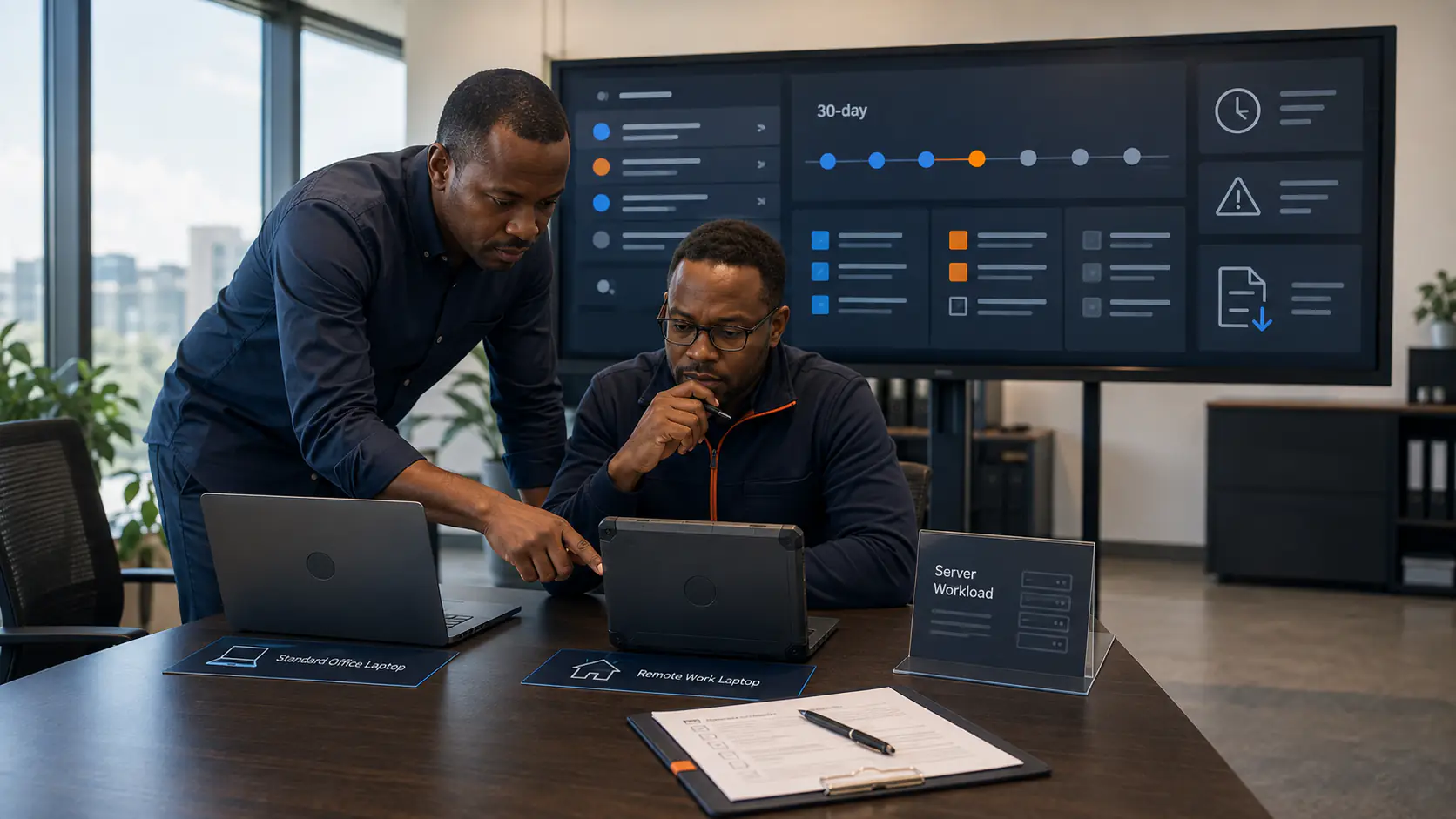
Try Bitdefender GravityZone Free for 30 Days: What Your Business Should Test.
A free product trial should answer whether GravityZone fits your devices, applications, policies, reporting needs, and operating team. Here is what organisations with at least 15 endpoints should test during the 30-day evaluation.
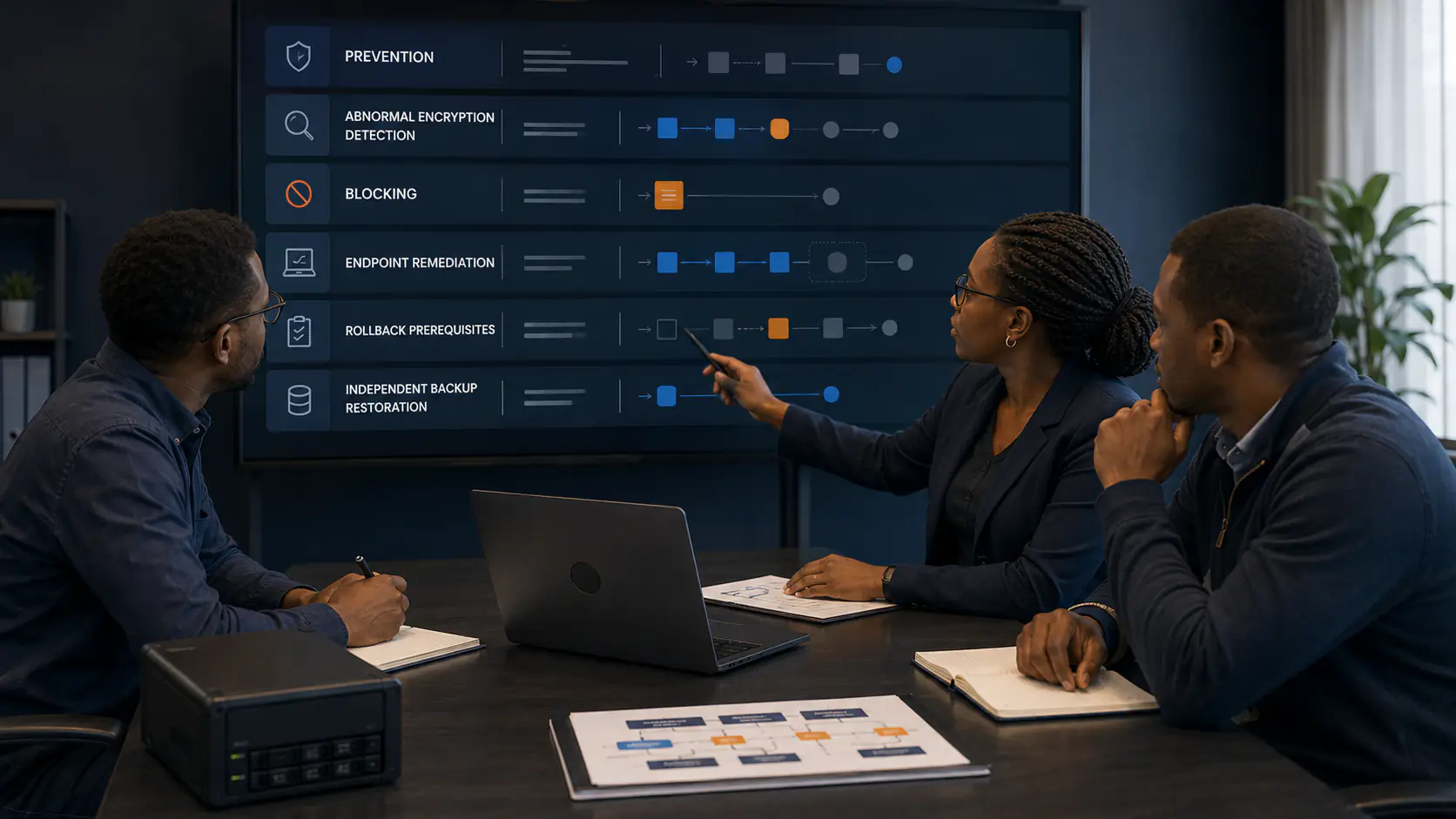
What Happens When Ransomware Starts Encrypting Files? GravityZone Prevention and Recovery Explained.
When ransomware begins abnormal encryption, GravityZone can detect the behaviour, block the responsible process, and preserve temporary recovery data where the required protection and prerequisites are active. Here is what that does—and does not—mean for recovery.

SAP ECC to S/4HANA: The 2027 Deadline Explained for Kenyan Businesses
SAP ends mainstream support for ECC at the end of 2027. Here is what the deadline actually means for Kenyan businesses, the migration paths to S/4HANA, and why planning now is cheaper than reacting later.