ServerVirtualization&Modernization
Proxmox / KVM / Hyper-V | ZFS Data Integrity | Swing Migration
Database-first infrastructure modernization. We migrate virtualization layers to Enterprise KVM/Proxmox with ZFS storage pools, ARC caching, and VirtIO para-virtualization — using the Swing Migration protocol that keeps production online throughout. Our most recent delivery: a legacy Hyper-V estate rebuilt as a clustered Proxmox VE environment with native cross-node replication and a permanent cold-standby DR node, handed over production-ready to a Kenyan dairy manufacturer.
Request Consultation
Technologies in use



Evidence, not promises.
See how clients improved resilience, visibility, and operational control with 912.
Hyper-V → Proxmox migration — dairy manufacturer
Legacy Hyper-V estate rebuilt as a clustered Proxmox VE environment: seven production workloads, ZFS RAID-Z2 storage, native cross-node replication, and a permanent cold-standby DR node — handed over production-ready.
Read the case studyThree-layer backup + hardened access
Local snapshots, network backup, and offsite cloud as three independent layers. Root login disabled, mandatory two-factor authentication on every administrative account, and no client credentials retained by 912.
Read the case studyRecovery tiers + documented boot order
Every workload assigned a recovery tier with a maximum-downtime target, plus a documented boot-up order after total outage — operational discipline handed to the client team, not just hardware.
Read the case studyWhen this service becomes urgent
912 modernizes server estates with swing migration discipline: stage production workloads away from the primary host, rebuild the platform, validate storage and drivers, then migrate back with rollback options intact.
Discovery call agenda
Workload inventory, swing server staging, backup verification, KVM/Proxmox build, driver injection, migration, and post-cutover support.
- 1Inventory workloads and downtime tolerance.
- 2Validate backup, storage, and rollback readiness.
- 3Choose swing migration phases and cutover sequence.
What the numbers say about leaving this alone
Consolidation is the easy part. What decides whether it was worth doing is what happens to the workloads on the host that fails.
More than half (57%) of the respondents to Uptime's 2025 annual survey say their most recent major outage cost more than $100,000.
Uptime Institute reported that around one in ten outages had a serious or severe impact.
Uptime Institute(opens in a new tab) — of outages, despite falling per-site frequency
Nutanix reported that 82% of respondents said their on-premises infrastructure was not fully ready for AI workloads.
Nutanix — in Nutanix's own index
Quick Answers
What is the Swing Migration Protocol?
The Swing Migration Protocol is the three-phase methodology 912 uses to modernize production server infrastructure without big-bang cutover risk. Phase I stages a secondary swing server, live-replicates production VMs to it, and boot-verifies critical ERP/SQL systems while the primary stays online. Phase II shifts operations to the swing server, zero-fills the primary, and rebuilds it with Enterprise KVM/Proxmox, ZFS storage pools, and RAM/SSD upgrades. Phase III migrates VMs back and injects VirtIO drivers. Every phase is reversible.
Why does 912 use Proxmox / KVM instead of VMware or Hyper-V?
Enterprise KVM and Proxmox VE combine licence-cost advantages with first-class support for ZFS storage pools, ARC caching, native cross-node replication, and VirtIO para-virtualization. Our most recent delivered migration moved a production estate from legacy Hyper-V to a clustered Proxmox VE environment. Hyper-V remains in scope for clients with deep Microsoft commitments, and VMware is supported for existing estates — but for new builds, the Proxmox/ZFS stack is the default recommendation.
Will server virtualization fix slow ERP performance?
Often yes — but only when the bottleneck is storage and memory. Most slow ERP and database environments suffer from undersized memory, missing ARC cache, or storage tiers that mix database VMs with file servers on the same disks. In that configuration a processor upgrade would not materially improve performance, and we will say so. 912's diagnostic finds the real bottleneck before recommending modernization scope.
Why does ZFS matter for production virtualization?
ZFS hashes every data block on write and recalculates the hash on read — if a discrepancy is found, the corrupted block is automatically repaired from parity data before the application is affected. Standard file systems like NTFS cannot detect this silent bit-rot corruption at all. For production SQL and ERP workloads, that guarantee means the financial data you read is identical to what was written.
What does 912 hand over at the end of a virtualization project?
A documented, hardened environment the client's internal team can run: the cluster configuration, per-VM resource allocations, recovery tiers with maximum-downtime targets, the boot-up order after a total outage, replication and backup schedules, and credential-handling procedures. Root login ships disabled, two-factor authentication is mandatory on every administrative account, and 912 retains no copies of client credentials. Six months of post-deployment support is included, with tier-three escalation under the service agreement after that.
What does a server virtualization project cost?
A reference engagement shape: KES 390,000 + VAT in professional services — covering the Swing Migration execution, ZFS/KVM hypervisor implementation, VirtIO driver injection, a deduplication backup manager with transaction-level SQL cloud sync, and DR implementation — with six months of post-deployment support included. Hardware upgrades (memory expansion, enterprise SSD/SAS tiers) are a separate client-side budget line; a comparable estimate was KES 593,750 + VAT, with documented cost-reduction options like tiered storage.
Modernization Capabilities
Clustered Proxmox / Enterprise KVM
- Two-node clusters with native ZFS cross-node replication
- ZFS RAID-Z2 storage pools with ARC caching
- VirtIO driver injection — up to 30% less CPU overhead
- Permanent cold-standby DR node, activated only under documented procedures
Database-First Resource Modeling
- Per-VM vCPU/RAM/disk allocation, documented in the handover
- Enterprise SSD for database workloads, SAS/HDD tiers for less critical systems
- Hypervisor headroom deliberately reserved — never run at saturation
- Recovery tiers per workload, with maximum-downtime targets and a boot-up order
Hardened, Documented Handover
- Root login disabled; mandatory two-factor authentication on every admin account
- Three-layer backup: local snapshot, network backup, offsite cloud
- Passwords never stored in handover documents — and 912 retains no copies of client credentials
- Operational handover to the internal IT team, with 912 on tier-three support
What This Removes
Slow ERP and database responsiveness caused by storage and memory bottlenecks that processor upgrades can't fix.
Silent corruption risk on standard file systems that cannot detect bit rot — ZFS hashes every block on write, verifies on read, and self-repairs from parity.
A single server as the entire estate — no replication target, no DR node, no tested recovery path.
Hypervisors running at saturation — long-term instability that only surfaces during peak load.
Honest Risk Framing
What this protects against — and what it doesn't.
Swing Migration requires swing hardware
The protocol's risk reduction depends on a secondary server capable of sustaining the production workload during Phase II. That capacity is a real budget line, not an abstraction — though it pays for itself twice, because the swing server is retained afterwards as the permanent cold-standby DR node.
Processor upgrades alone don't fix storage bottlenecks
If we profile the bottleneck and find it's storage or memory, we'll say so — even when the conversation started about 'newer CPUs.' In a properly designed environment the processor operates comfortably within its intended range; spending on CPU when the bottleneck is elsewhere is wasted budget, and we'll push back on that honestly.
Hypervisor headroom is non-negotiable
Running a platform at full saturation leads to instability over time. We deliberately reserve a portion of server capacity for the hypervisor itself — scheduling, caching, background operations — so the platform always has operating room. If a quote pressure-tests against running the cluster hot, we'll quote the next-size-up host rather than promise stability we can't deliver.
The Swing Migration Protocol
Three phases. Zero big-bang cutover. Full rollback at every step — the primary server is never touched until production is verified running elsewhere.
Part of the 912 six-phase engagement model — this is how it runs for this service.
Phase I: Staging & Validation
Deploy a secondary swing server and live-replicate production VMs to it. Critical systems — ERP, SQL — are booted on the swing server and verified for integrity while the primary stays online serving users.
Phase II: Core Transformation
Shift operations to the swing server. Zero-fill the primary to remove legacy file systems, install the Enterprise KVM hypervisor, configure ZFS storage pools, and fit the new high-performance RAM and enterprise SSDs.
Phase III: Restoration & Optimization
Migrate VMs back to the modernized primary and inject VirtIO drivers into the Windows guests to unlock full throughput. Configure replication and the three-layer backup policy.
Handover & Support
Documented handover to your internal IT team — cluster administration, recovery tiers, boot order, credential rotation — with six months of post-deployment support included and 912 on tier-three escalation.
Running a platform at full saturation leads to instability over time. This design avoids that by ensuring the platform always has operating room.
Why Database-First
Storage & Memory First, CPU Second
Most ERP slowdowns are storage or memory bottlenecks — not CPU. In a properly designed environment the processor operates comfortably within range, and a CPU upgrade would not materially improve performance. We diagnose properly and fix what's actually slowing you down — even when the conversation started about 'newer CPUs.'
Risk Reduction by Design
The Swing Migration protocol means production never sees a high-risk cutover window — every phase is reversible and validated under live data before the next phase starts. The same discipline extends to DR: replicated VMs are never brought online while production runs, because doing so creates split-brain, duplicate database state, and IP conflicts.
The DR Node Outlives the Migration
The swing server doesn't go back in a box. It becomes a permanent cold-standby disaster recovery node receiving scheduled replication — so the migration project leaves behind a continuity posture, not just a faster server.
Compare the deployment model, operating work, lifecycle, prerequisites, and where another option may be the better fit before selecting a product.
From the Delivered Engagement
A Kenyan dairy manufacturer's Hyper-V estate, rebuilt on clustered Proxmox VE and handed over production-ready.
Proxmox
Technology in scope
VMware
Technology in scope
Microsoft Hyper-V
Technology in scope
KVM/ZFS
Technology in scope
Common Questions
Everything you need to know about Server Virtualization & Modernization.
What virtualization platforms does 912 deploy?
Enterprise KVM/Proxmox by default with ZFS storage pools, VirtIO para-virtualization, and Windows Server installation. We also configure Hyper-V where existing Microsoft licensing makes it the right choice. The platform decision is made during discovery based on workload mix (SQL/ERP/Domain Controllers), licence position, and DR strategy.
What is the Swing Migration protocol?
A risk-reduction approach unique to 912: a secondary server is deployed first to stage and validate the migration, live-replicate production VMs, and boot critical ERP/SQL systems for integrity verification — all while the primary stays online. Phase II shifts operations to the swing server, wipes and reinstalls the primary with the new hypervisor and ZFS pools. Phase III migrates VMs back. Zero big-bang cutover, full rollback at every step.
How does ZFS help with database performance and integrity?
ZFS detects silent corruption (bit rot) that standard file systems miss — every block is hashed on write, recalculated on read, and automatically repaired from parity data if a discrepancy is found. ARC caching identifies frequent database queries and serves them from high-speed RAM instead of slower disk, measurably reducing I/O latency for read-heavy ERP workloads. Combined with VirtIO para-virtualization — which cuts CPU overhead by up to 30% — and enterprise SSDs for database VMs, the same hardware delivers noticeably faster report generation and ERP responsiveness.
How long does a virtualization modernization take?
Typical mid-sized deployment (10-20 VMs, SQL + ERP + Domain Controller workloads): 4-8 weeks end-to-end including hardware procurement, swing migration, hypervisor configuration, security hardening, and 6 months of post-deployment support included in the engagement.
Do you supply the hardware or just the services?
Both options. We can quote a turnkey hardware refresh (memory, enterprise SSD/SAS, networking) or work entirely with existing client hardware if it meets the workload profile. We always validate hardware capability against the resource model before committing to the migration plan.
What happens to performance if the platform runs at capacity?
Running hypervisors at saturation creates long-term instability. We always keep hypervisor headroom (typically 25-30% RAM/CPU reserve) and document growth runway. If your existing infrastructure is at saturation, the discovery surfaces this before migration so capacity planning is real, not aspirational.
Related Technical Protocol
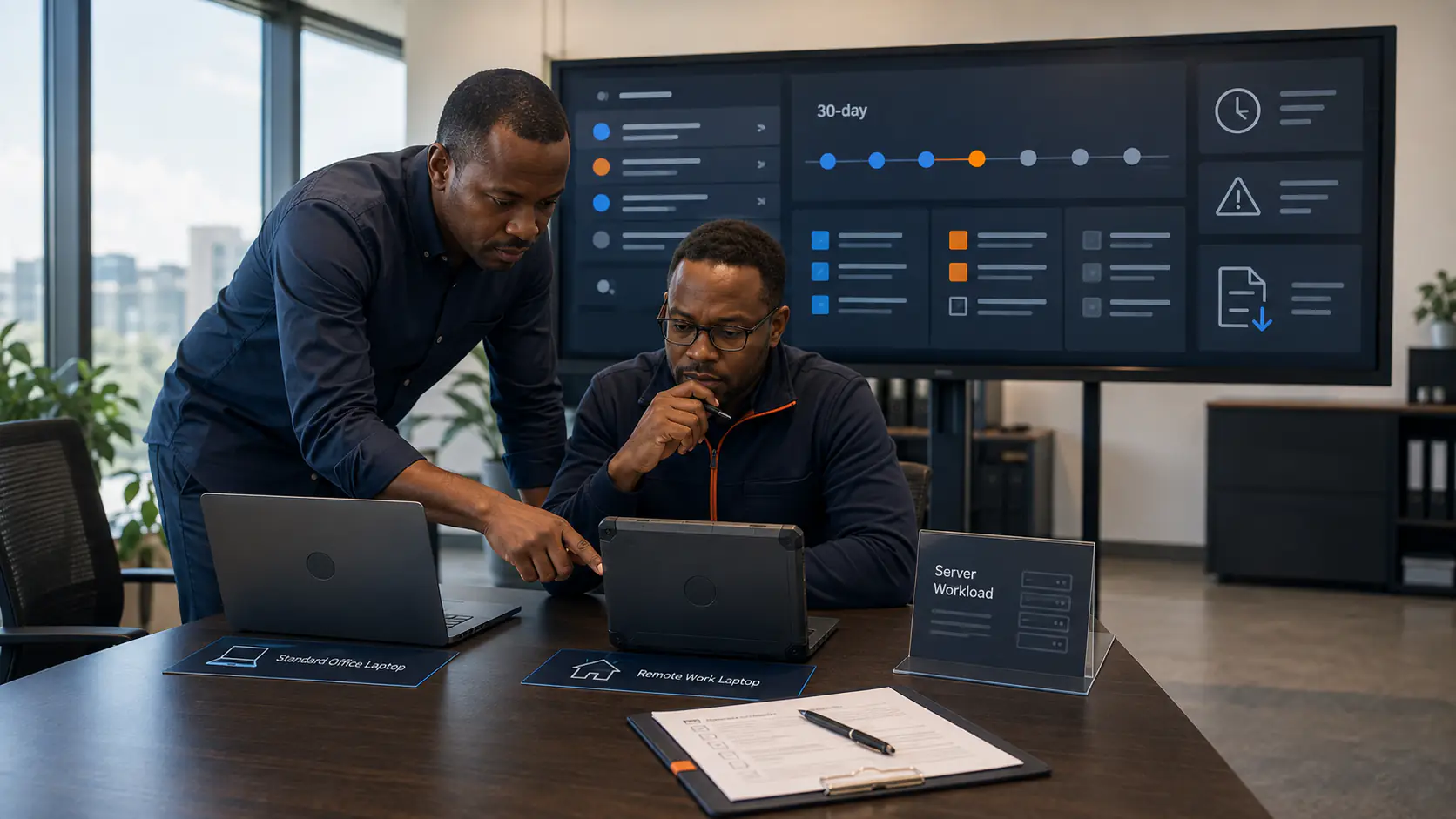
Try Bitdefender GravityZone Free for 30 Days: What Your Business Should Test.
A free product trial should answer whether GravityZone fits your devices, applications, policies, reporting needs, and operating team. Here is what organisations with at least 15 endpoints should test during the 30-day evaluation.
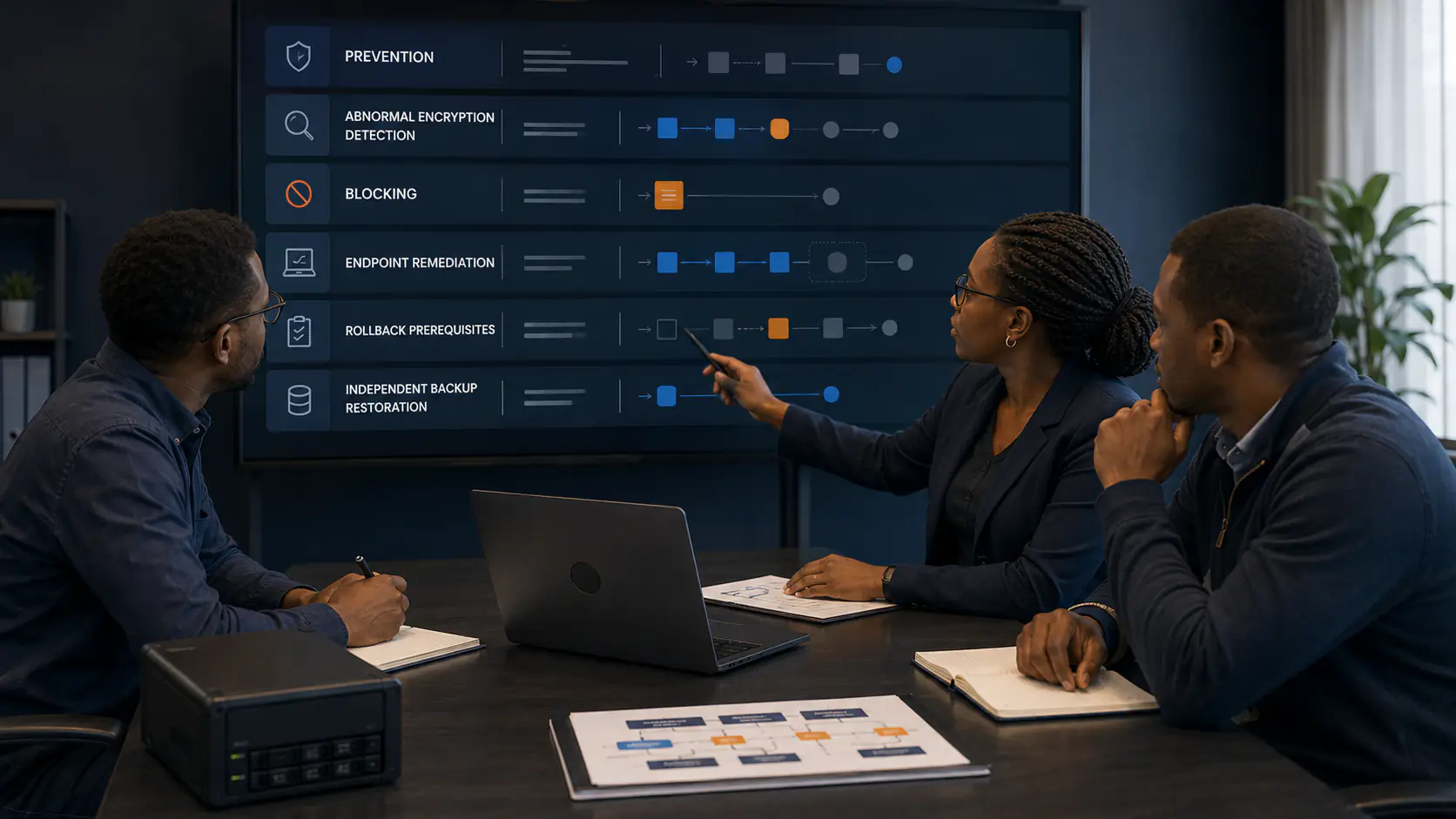
What Happens When Ransomware Starts Encrypting Files? GravityZone Prevention and Recovery Explained.
When ransomware begins abnormal encryption, GravityZone can detect the behaviour, block the responsible process, and preserve temporary recovery data where the required protection and prerequisites are active. Here is what that does—and does not—mean for recovery.
SAP ECC to S/4HANA: The 2027 Deadline Explained for Kenyan Businesses
SAP ends mainstream support for ECC at the end of 2027. Here is what the deadline actually means for Kenyan businesses, the migration paths to S/4HANA, and why planning now is cheaper than reacting later.