IPTelephonyThatCutsCallCosts
Hosted 3CX or On-Premise Yeastar — Quoted Side by Side
Most PBX vendors quote you the system they sell. We quote both architectures — hosted 3CX in the cloud and an on-premise Yeastar unit — side by side, with the conditions each one needs to succeed, and let the trade-offs decide. Local SIP trunking typically cuts call costs 40%+ versus a legacy PABX, and delivery is measured in days: our most recent hosted 3CX system was commissioned in three.
Request Consultation
Technologies in use
 YeastarSafaricom SIP
Evidence, not promises.
See how clients improved resilience, visibility, and operational control with 912.
Hosted 3CX — professional services group
Hosted 3CX with Safaricom SIP trunking and VLAN tagging, Wi-Fi and executive handsets, and a 4-concurrent-call PRO licence — commissioned and live in three days.
Read the case studyTwo-option decision quote
Hosted 3CX and on-premise Yeastar were quoted side by side, with the operating conditions and trade-offs stated before signature.
Read the case studyThree-month support window
Maintenance and changes to every configuration 912 deployed, included for three months after commissioning — in the engagement terms, not a verbal promise.
Read the case studyWhen this service becomes urgent
912 deploys 3CX/IP telephony so branch voice, mobile users, call routing, and support workflows operate as one managed communication layer rather than isolated desk phones.
Discovery call agenda
Number and user inventory, SIP/hosting design, handset or softphone rollout, routing, testing, training, and support handover.
- 1Review users, numbers, branches, and call flows.
- 2Confirm SIP, hosting, and device constraints.
- 3Plan migration, training, and fallback.
What the numbers say about leaving this alone
The PABX in the comms room still works, which is exactly why nobody has priced what replacing it costs — or what it costs to keep it.
The ITU reported that fixed-telephone subscriptions continued to decline by 3% per year.
The ITU recorded 56 mobile-broadband subscriptions per 100 inhabitants in Africa.
International Telecommunication Union(opens in a new tab) — the connectivity base IP telephony actually runs on
Two Architectures, One Honest Recommendation
Option 1: Hosted 3CX
- Scales with headcount without new hardware
- Remote and mobile work built in
- Auto-attendant, voicemail-to-email, video conferencing
- Safaricom SIP trunking with VLAN tagging
- Needs: a stable, high-speed internet connection
Option 2: On-Premise Yeastar
- Reference unit supports up to 20 extensions, 10 concurrent calls
- FXS, FXO, ISDN BRI, and GSM/4G gateway connectivity
- Web-based management your team can run
- Needs: enterprise-grade Wi-Fi coverage for wireless handsets
Unified Communications (Linkus)
- VoIP calls, video, messaging, and presence on desktop + mobile
- One extension follows the person, not the desk
- Without it, every extension needs a physical handset — we say so up front
The Static Communication Wall
Legacy copper-wire PABX systems with poor call quality and zero scalability.
High monthly bills due to unoptimized call routing — local SIP trunking is the structural fix.
Disconnected remote workers who can't access office extension systems.
Vendors who quote only the architecture they happen to sell, with the conditions for success left unsaid.
Honest Risk Framing
What this protects against — and what it doesn't.
VoIP quality depends on stable internet
Hosted 3CX requires a reliable connection to the cloud PBX. We size SIP trunks and recommend backup internet paths, but ISP-side outages still drop calls. For sites with patchy connectivity, we recommend the on-premise Yeastar IP PBX instead — less internet-dependent.
Wi-Fi phones need verified coverage
Wireless IP phones fail silently if Wi-Fi coverage is weak at the extension location. We verify signal strength at every extension before shipping handsets and refuse to ship installations that will fail. Coverage gaps surfaced after deployment are quoted as a separate AP-expansion project.
Safaricom airtime is customer-side
Hosted 3CX includes the PABX licensing and cloud hosting. Outbound call airtime via Safaricom (or any SIP provider) is billed directly to you. 912 doesn't mark up airtime.
How an Engagement Runs
From the delivered playbook: decision framework first, installation second.
Part of the 912 six-phase engagement model — this is how it runs for this service.
Needs & Site Review
Call volumes, extension count, remote-work needs, internet reliability, and Wi-Fi coverage — the facts that decide which architecture wins.
Two-Option Quote
Hosted 3CX and on-premise Yeastar quoted side by side, each with its conditions for success stated plainly — including the ones that cost us the easier sale.
Trunking & Installation
Safaricom SIP and VLAN tagging configured, handsets provisioned, extensions built. Reference delivery: hosted PABX in 3 days, local PABX in 2.
Support Window
Three months of support on every configuration 912 deploys — maintenance and changes to the policies and extensions we built — with ongoing support contracts available beyond.
Why 912
The Decision Framework Is the Service
Hosted wins on scalability, remote work, and zero maintenance. On-premise wins on internet independence and control. We put both on the table with real prices — the architecture decision belongs to you, made with full information.
Commissioned in Three Days
A hosted 3CX system with Safaricom SIP trunking was quoted, installed, commissioned in three days, and supported for a Nairobi professional services group by the same team.
Conditions for Success, In Writing
VoIP fails when the prerequisites are ignored. Our proposals state them before you sign: internet quality for hosted, Wi-Fi coverage for wireless handsets, handset counts without Linkus.
Compare the deployment model, operating work, lifecycle, prerequisites, and where another option may be the better fit before selecting a product.
All vendor decision guides3CX
Technology in scope
Yeastar
Technology in scope
Safaricom SIP
Technology in scope
Common Questions
Everything you need to know about IP Telephony That Cuts Call Costs.
What IP telephony platforms does 912 deploy?
912 deploys two architectures and quotes them side by side: hosted 3CX — a cloud PBX with no on-site hardware, managed and updated by the provider, with native mobile and desktop clients — and on-premise Yeastar IP PBX units for businesses that want local control and minimal internet dependency. The recommendation follows your facts: internet reliability, extension count, remote-work needs, and who will maintain the system.
How much does IP telephony cost in Kenya?
IP telephony is scoped around concurrent calls, extensions, SIP connectivity, hosting, handsets, network readiness, and support. 912 can quote hosted 3CX and on-premise Yeastar side by side so the commercial comparison reflects the same user and call-flow requirements.
How long does deployment take?
Days, not months — from the delivered engagement's own terms: hosted 3CX PABX in 3 days, on-premise Yeastar PABX in 2 days. The schedule assumes the conditions for success are in place — a stable internet connection for hosted, verified Wi-Fi coverage for wireless handsets — which is exactly what the site review confirms before we commit dates.
Should we choose hosted 3CX or an on-premise PBX?
It depends on your internet, not your preference. Hosted 3CX wins on scalability, remote work, advanced features, and zero on-site maintenance — but every call rides your internet connection. On-premise Yeastar wins on internet independence and local control, and connects to FXS/FXO/ISDN/GSM lines — but you own the box and its upkeep. 912 quotes both with the trade-offs stated and lets the conditions on the ground decide.
Do all staff need physical desk phones?
No — with the Linkus unified-communications app, an extension follows the person to their laptop or mobile, with calls, video, messaging, and presence in one place. The honest flip side, stated in our quotes: without Linkus, each person who requires an extension needs a physical handset, and that hardware belongs in the budget from day one.
Do you provide support after deployment?
Yes — 912 telephony deployments include a 3-month support window covering maintenance and changes to any configuration 912 deployed, with ongoing support contracts available beyond that. Call-quality problems usually trace to network conditions, which is why the engagement starts with a site review rather than a handset catalogue.
Related Technical Protocol
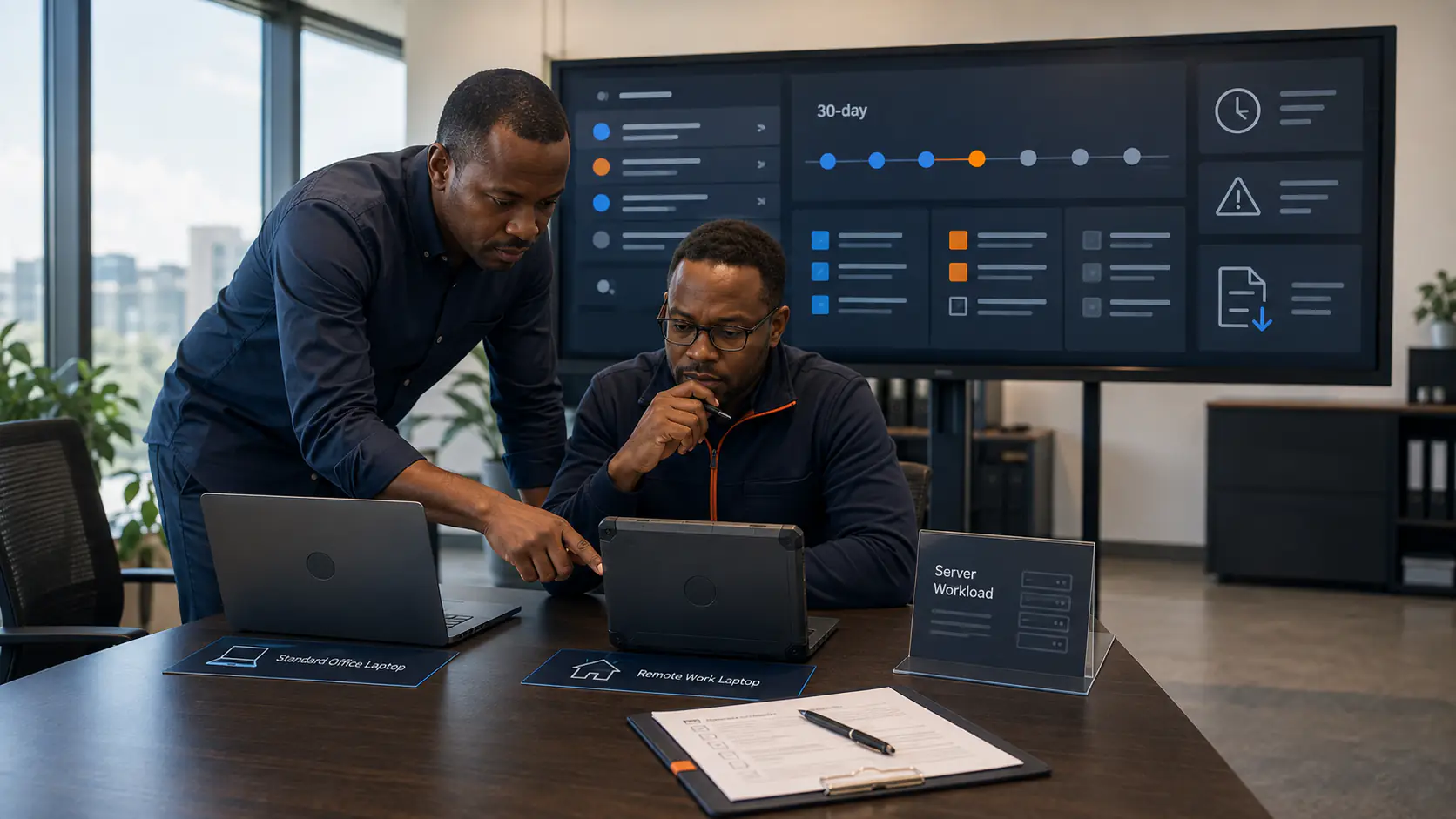
Try Bitdefender GravityZone Free for 30 Days: What Your Business Should Test.
A free product trial should answer whether GravityZone fits your devices, applications, policies, reporting needs, and operating team. Here is what organisations with at least 15 endpoints should test during the 30-day evaluation.
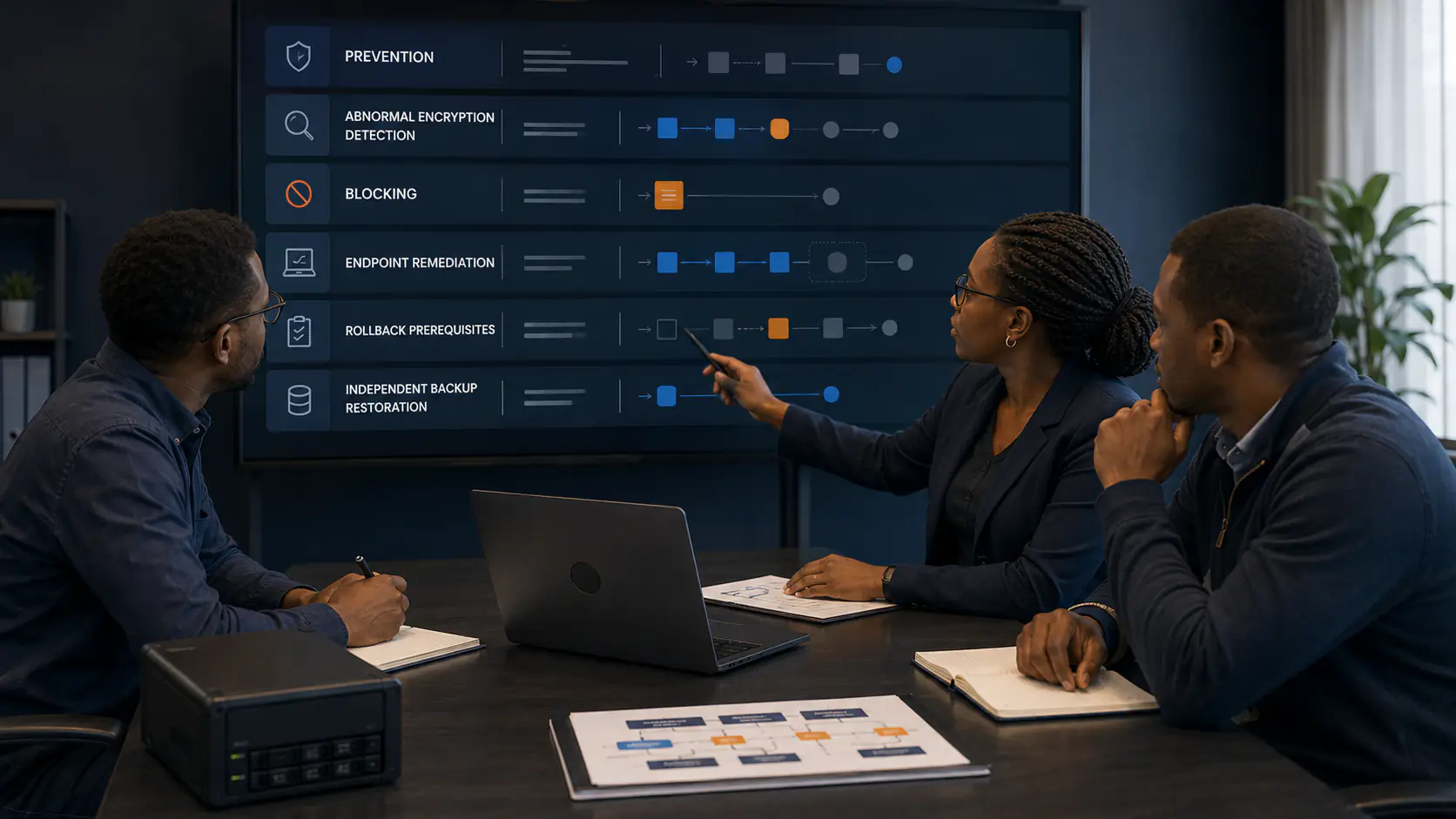
What Happens When Ransomware Starts Encrypting Files? GravityZone Prevention and Recovery Explained.
When ransomware begins abnormal encryption, GravityZone can detect the behaviour, block the responsible process, and preserve temporary recovery data where the required protection and prerequisites are active. Here is what that does—and does not—mean for recovery.
SAP ECC to S/4HANA: The 2027 Deadline Explained for Kenyan Businesses
SAP ends mainstream support for ECC at the end of 2027. Here is what the deadline actually means for Kenyan businesses, the migration paths to S/4HANA, and why planning now is cheaper than reacting later.