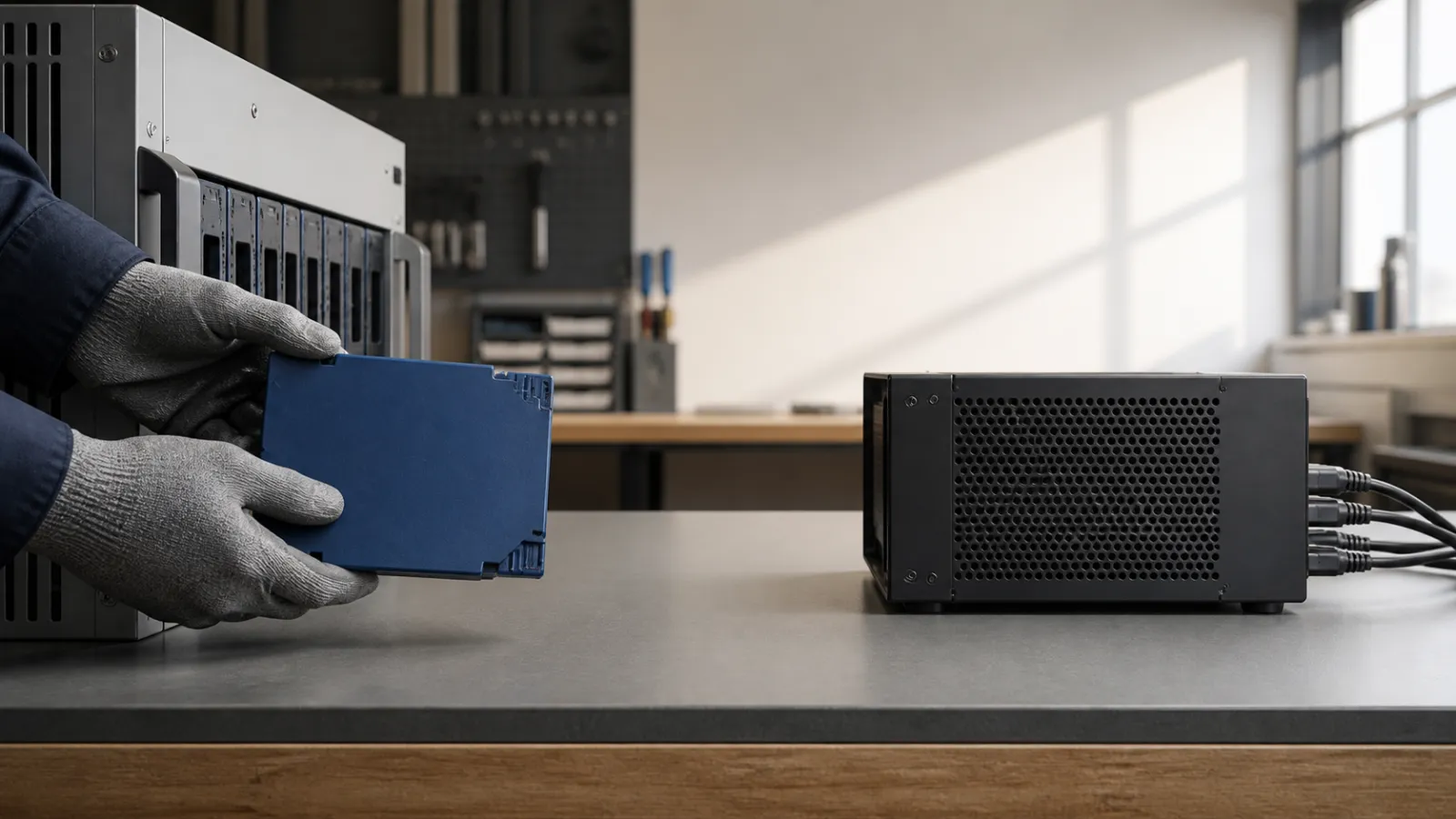
What Happens When Ransomware Starts Encrypting Files? GravityZone Prevention and Recovery Explained.
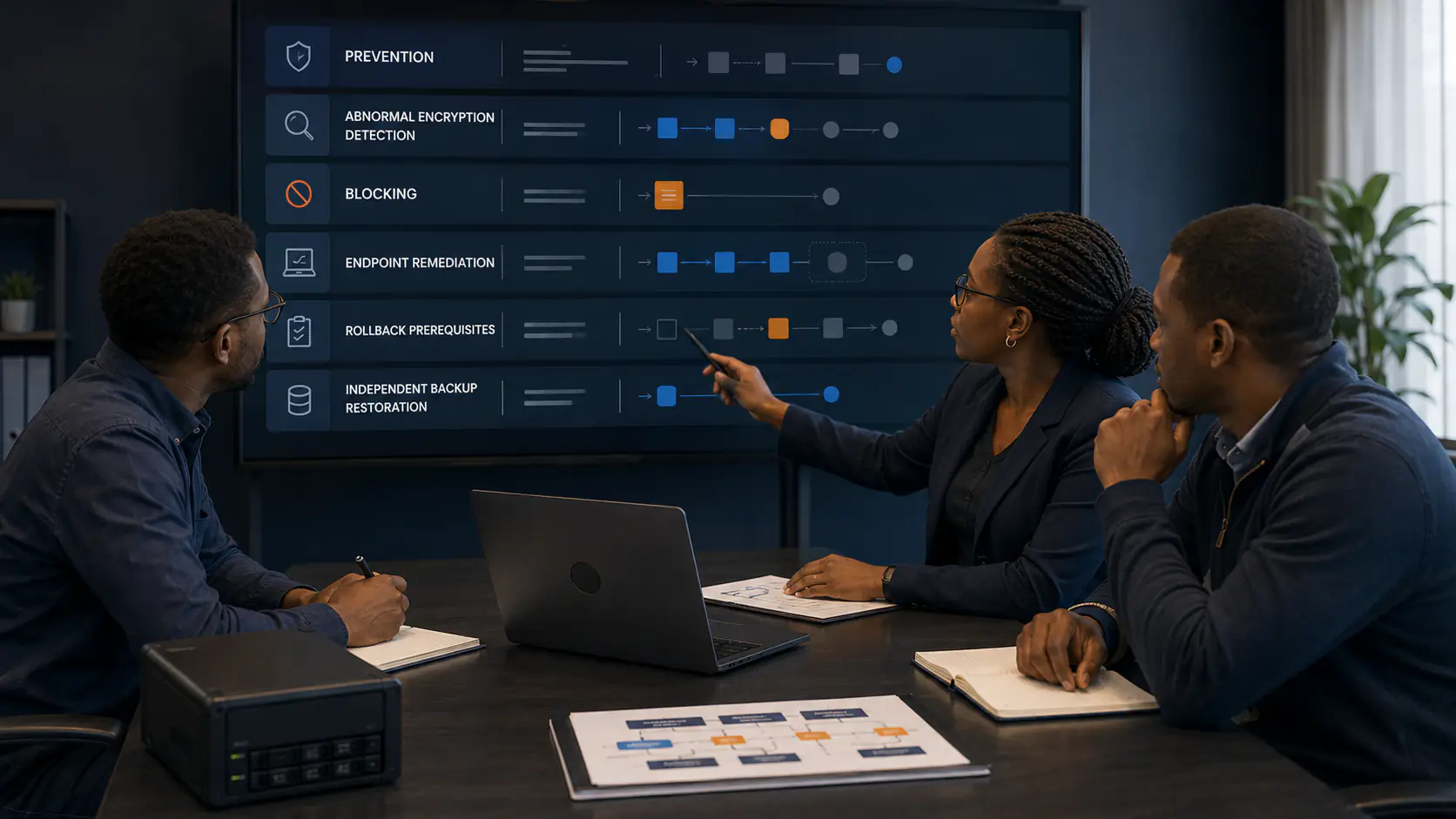
GravityZone can detect abnormal encryption, block the responsible process, and support file recovery from temporary backups when the required protection modules, supported endpoint, configuration, storage, and recovery data are available. It cannot guarantee recovery, replace tested backups, or make incident and ODPC decisions for the organisation.
- Prevention, abnormal-encryption detection, blocking, remediation, rollback, and backup are different controls.
- Recovery depends on a supported endpoint, active Antimalware and Advanced Threat Control, correct policy configuration, available storage, and retained recovery data.
- A clean backup still needs isolation, monitoring, and tested restore procedures.
- Endpoint records support investigation; they do not guarantee recovery or determine legal reportability.
“Ransomware protection” is not one switch. Prevention, abnormal-encryption detection, blocking, remediation, rollback, backup, and business recovery are separate controls with separate failure modes.
Prevention comes before recovery
GravityZone can apply malware, exploit, network-attack, behavior, and ransomware controls according to the licensed edition and configuration. Bitdefender’s ransomware prevention and mitigation documentation describes layers that can identify suspicious behavior, including abnormal encryption activity, and take configured actions.
The useful question is not whether a brochure says “ransomware.” It is whether the selected edition, endpoint, policy, exclusions, update state, and operating team make the relevant control active and supportable in your environment.
Detection and blocking need an owner
An alert that nobody reviews is not an incident process. Before deployment, name the people allowed to investigate, isolate an endpoint, communicate with staff, preserve evidence, involve management, and authorize restoration. Put the contracted 912 monitoring and escalation window beside the client’s internal responsibilities.
912 does not describe this service as a 24/7 SOC or MDR service. Continuous threat hunting, containment authority, forensic response, and around-the-clock coverage are separate capabilities and must not be inferred from the GravityZone licence or a managed endpoint quote.
What happens when abnormal encryption begins
Bitdefender documents a ransomware-remediation flow that detects abnormal encryption, blocks the responsible process, and can restore affected files from temporary backup copies. That sequence depends on the required protections being active and on the endpoint and policy meeting the documented prerequisites. It is not the same thing as recovering an entire business environment.
Recovery has prerequisites and limits
Bitdefender’s documentation states that Ransomware Remediation requires Antimalware and Advanced Threat Control. Recovery also depends on a supported endpoint, policy configuration, service health, retained temporary backup data, storage availability, and the behaviour of the attack. On-demand recovery is time-limited, so incident handling cannot be postponed indefinitely. If a prerequisite is absent—or the incident reaches systems outside the feature’s scope—the result can be partial or unavailable.
That is why 912 does not promise that rollback will restore every file. Validate the feature on suitable test systems before an incident, document its limits, monitor whether it remains enabled, and retain a separate recovery path.
Endpoint rollback does not replace backup recovery
A backup should be isolated from the failure path it is intended to survive, monitored, retained according to the business requirement, and tested through restoration. A green backup job is not proof that the data, application, identity dependencies, and recovery sequence will work.
The recovery plan should also cover servers, SaaS data, databases, cloud control planes, network configuration, identity systems, and business processes. Endpoint software sees only part of that environment.
Build the technical timeline
Bitdefender documents configurable notification types and a Report Builder that can export reports. Those records can help the incident team answer when a device was observed, what behavior was recorded, and which endpoint action followed.
They are one evidence source. Correlate them with identity, firewall, email, application, cloud, backup, and human reports. Preserve original timestamps and access controls. Do not edit a convenient narrative into the record before the incident lead and legal advisers have assessed the facts.
What GravityZone cannot decide
GravityZone cannot determine whether the incident is reportable to the ODPC, identify every data subject affected, file the notification, guarantee that the organisation is compliant, or replace legal advice. It also cannot replace crisis communications, business continuity, offline decision authority, or the wider incident-response plan.
The strongest operating model is layered: reduce the chance of execution, detect suspicious behavior, contain with authorized actions, preserve evidence, recover from tested backups, and learn from the incident. Endpoint security contributes to that chain. It is not the whole chain.
Frequently Asked Questions
Does GravityZone stop all ransomware?
Can GravityZone roll back encrypted files?
Why are backups still required?
What evidence can GravityZone provide after an incident?
About the Author
Abbott Gitonga
Sales Representative
First point of contact for new engagements. Scopes what a business actually needs before anything is quoted — which usually means asking about the cost of the current setup rather than leading with a product. Where a requirement falls outside what 912 should be doing, that gets said early.