Zero production downtime. Silent data corruption eliminated. A dairy co-operative's ERP on solid ground.

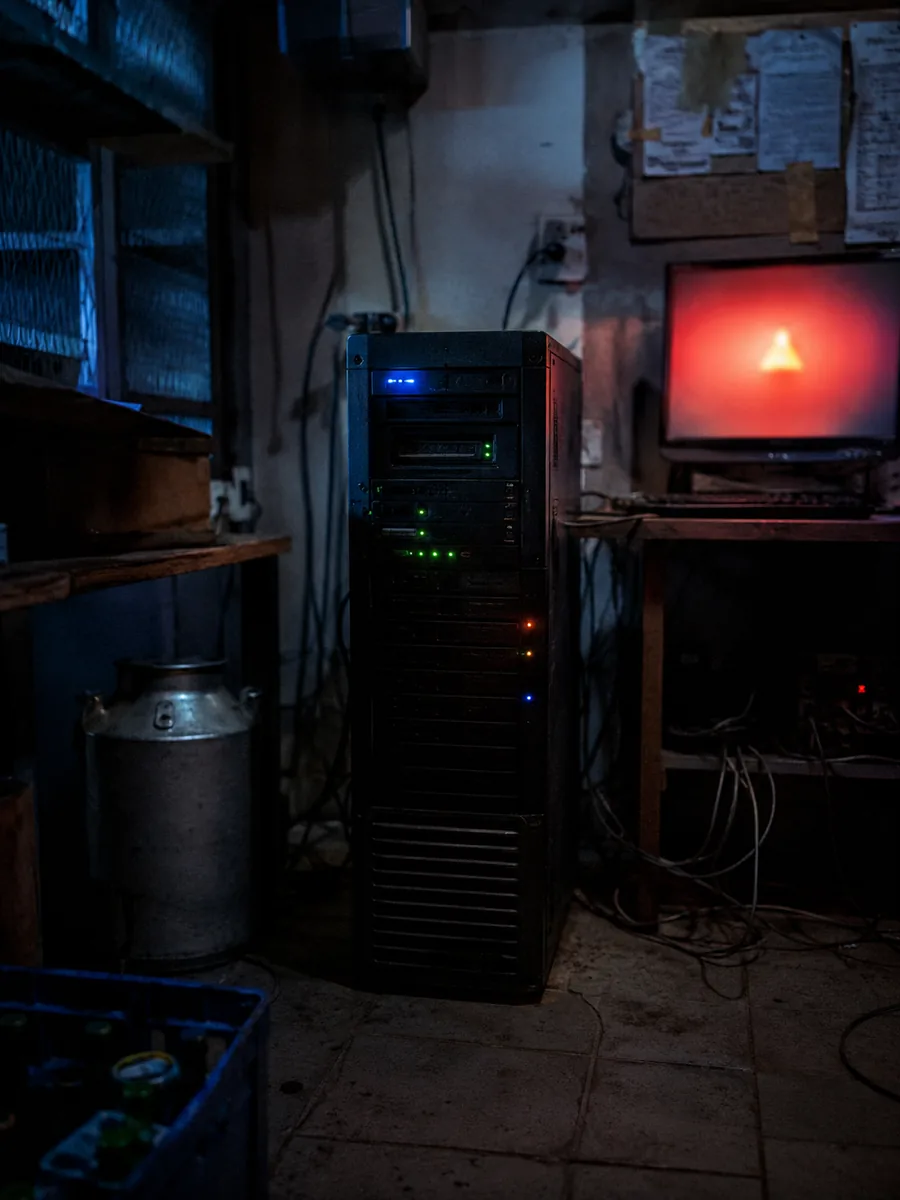
A Kenyan dairy co-operative was running its financial and operational systems — including a SYSPRO ERP and milk collection databases — on a legacy virtualization stack built on standard NTFS file systems. NTFS cannot detect block-level degradation on aging drives: corrupted data is read and written without any error being raised. For a co-operative managing member payments and daily milk collection records, this represented an unquantified but material integrity risk. Beyond data integrity, poor RAM utilization meant database queries were being served from slow SAS storage rather than memory, producing sluggish ERP responsiveness. The virtualization layer used full hardware emulation, consuming CPU cycles that should have been processing transactions. Critically, the organization had no disaster recovery capability — a primary server failure would leave the co-operative unable to operate with no tested failover path.
Nine One Two Holdings deployed its proprietary Swing Migration protocol — a three-phase approach designed to eliminate production downtime risk entirely. In Phase I, a secondary Swing Server was deployed and live replication of all active production VMs was established while the primary server remained fully operational. Critical systems — the SYSPRO Database Server, Ordering Database Server, and SYSPRO Application Server — were booted and verified on the Swing Server before any production change was made.
Phase II shifted production to the Swing Server while the primary was zero-fill formatted and rebuilt with an Enterprise KVM hypervisor (Proxmox) and ZFS storage pools, with new enterprise RAM and SSDs integrated. Phase III migrated all six production VMs back with VirtIO para-virtualization drivers injected into the Windows guest OS — reducing CPU emulation overhead by up to 30% and freeing those cycles for ERP transaction processing. ZFS checksumming was enabled across all VMs, providing automatic silent-corruption detection and repair. The Swing Server was retained as a permanent cold standby disaster recovery node with 15-minute async replication.


The migration completed with zero unplanned downtime. Every data block written to production storage is now hashed and verified on read — any silent corruption is automatically repaired from ZFS parity data before it can reach the application layer. ERP responsiveness improved materially as ARC caching began serving frequent SYSPRO queries from server RAM rather than SAS storage. The organization that previously had no recovery path now has a tested standby node, an automated daily backup pipeline, and six months of post-deployment support included at no additional cost.
What changed, what risk was removed, and where to go next.
Production ERP workloads needed modernization without a high-risk cutover.
Swing migration delivered zero production downtime and removed silent data-corruption risk.
Big-bang migration and storage-integrity exposure.
Turn this result into a scoped conversation.
Infrastructure modernization is not just about performance — it is about data integrity. For any organization with high-velocity financial records, the underlying storage architecture matters as much as the applications running on top of it. A structured migration approach like the Swing protocol eliminates the largest risk in any server transition: the moment when production systems are taken offline.